

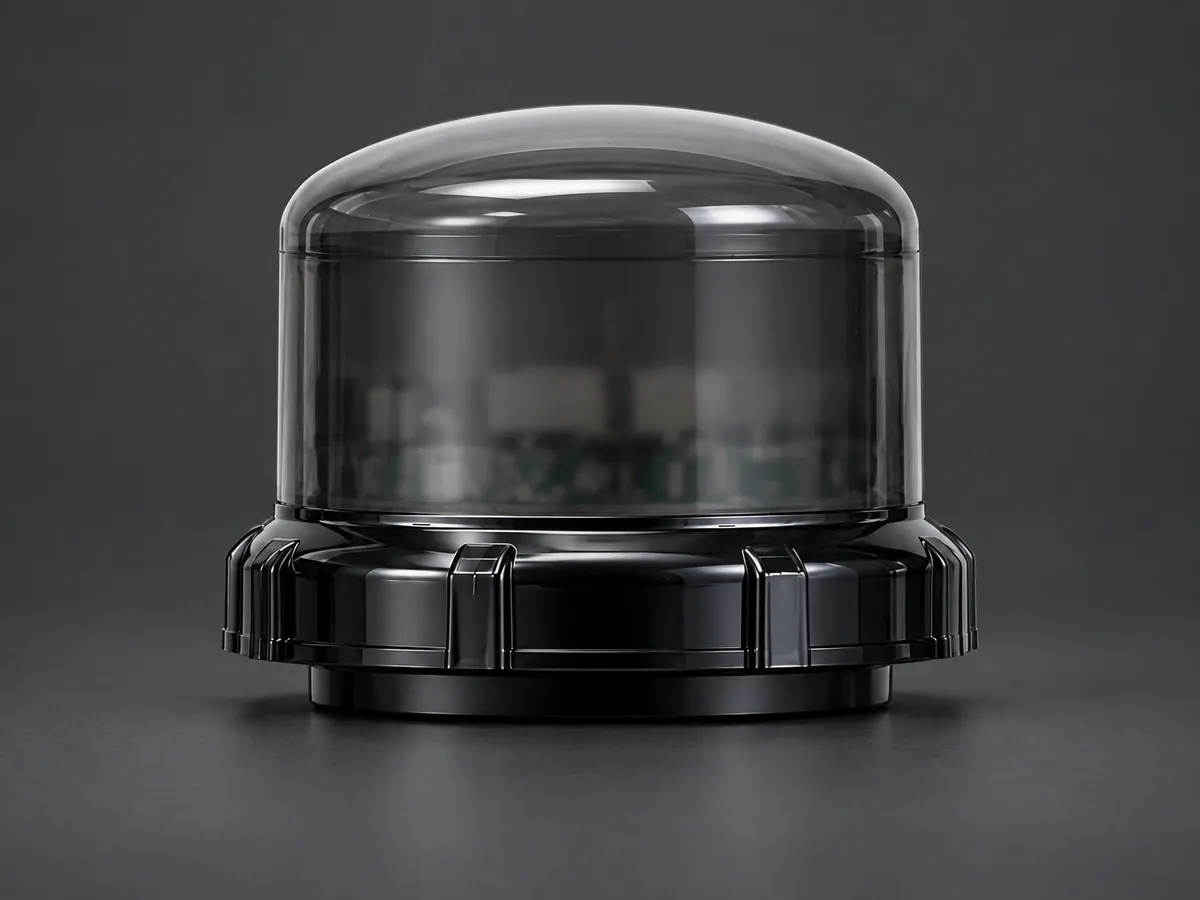
#Datasheet
Control and diagnose every luminaire via Zhaga and DALI
Common luminaire interface, connectivity variants, range, consumption and events towards AITHANEX or your system.
LoRa variant
Own LoRa network: nodes share a network with a LoRa Router as the backhaul.
LoRa architecture
- Lux AITHA LoRa node: controls and supervises the luminaire, sends status, consumption and events over LoRa and receives schedules and dimming commands.
- LoRa Router: concentrates the nodes and carries data and commands to AITHANEX or the project-defined system over 4G, Ethernet or WiFi.
- Own 868 MHz network, without depending on per-point mobile coverage.
LoRa Router
- LoRa radio: EByte E22 or E220 module.
- Frequency: 868 MHz (EU) or 915 MHz (Americas), configurable by region; extended-band module.
- LoRa antenna: 8 dB.
- Multi-band 4G LTE Cat-1 (SIMCom A7670/A7672), Ethernet and WiFi uplink, with SIM and eSIM and automatic switching between connections.
- Fieldbus: RS485.
- Outdoor enclosure with door (optional): outdoor-rated design.
IoT variant
Direct mobile connection: each node communicates with no LoRa Router.
IoT architecture
- Each node communicates directly over a compatible cellular network, with no LoRa Router.
- ESP32-S3-MINI microcontroller and SIMCom SIM7080G 4G (LTE-M) / NB-IoT cellular module.
- Local USB programming and service, remote OTA updates through AITHANEX Things.
Luminaire interface and control
Common to both variants.
Luminaire control
- On, off and dimming.
- DALI from the Zhaga connector, DALI-2 and D4i compatible (not certified).
- DMX available on request.
- Individual and group control.
Luminaire connection
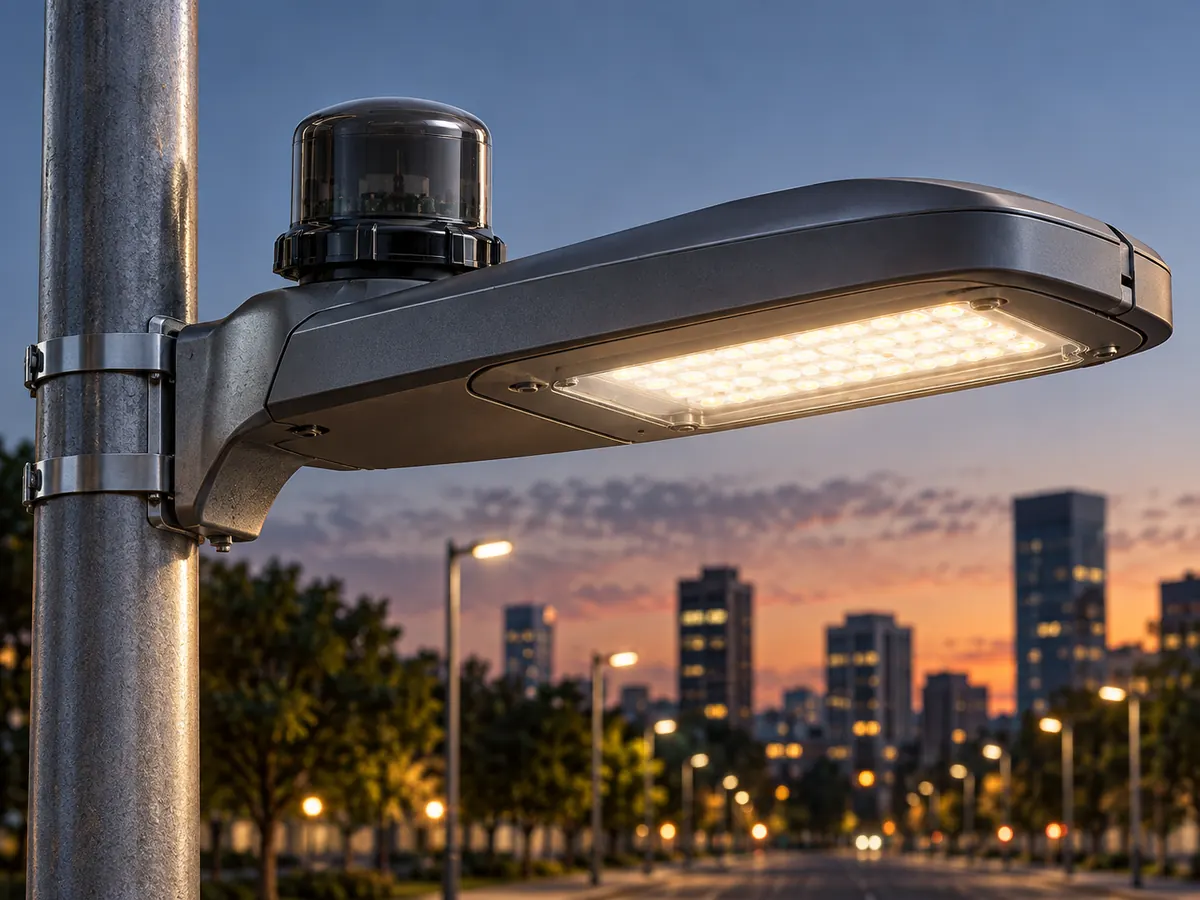
- Zhaga mechanical format.
- Zhaga Book 18, 4-pin.
- Nominal power of 16 VDC from the Zhaga connector.
Scheduling and status
- Schedules, scenes, profiles and operation rules.
- Operating, consumption and event reporting per luminaire.
- Integrated ambient light sensor.
- Fault detection based on the available signals.
Communication by variant
LoRa
- LoRa link to the LoRa Router.
- Output power: up to 22 dBm, configurable; set to 14 dBm in the EU per regulations.
- Frequency: 868 MHz (EU) or 915 MHz (Americas), configurable by region; extended-band module.
- Range: up to 5 km (depends on scenario, installation and radio environment).
4G / NB-IoT
- 4G (LTE-M) or NB-IoT via SIMCom SIM7080G module.
- No LoRa network or dedicated LoRa router required.
- Integration with AITHANEX Things or the project-defined system.
Specifications of Lux AITHA LoRa
| Parameter | Value |
|---|---|
| Luminaire connection | 4-pin Zhaga Book 18. |
| Power supply | From the Zhaga connector, 16 Vdc nominal supply. |
| Luminaire control | DALI from the Zhaga connector, compatible with DALI-2 and D4i (not certified). DMX on request. |
| Network | The system own LoRa network, with a LoRa Router. |
| Output power | Up to 22 dBm, configurable (14 dBm in the EU as regulated). |
| Frequency | EByte E22 or E220 extended-band module, 868 MHz (EU) or 915 MHz (Americas), configurable by region. |
| Range | Up to 5 km. Practical range depends on the scenario, installation and radio environment. |
Hardware of Lux AITHA NB-IoT
| Parameter | Value |
|---|---|
| Microcontroller | ESP32-S3-MINI. |
| Cellular module | SIMCom SIM7080G (LTE-M and NB-IoT). |
| Module type | LTE Cat-M1 (4G IoT) and NB-IoT. |
| Coverage | Subject to a compatible LTE-M / NB-IoT network and operator conditions. |
| LoRa network and LoRa Router | Not required for communication with the platform. |
| Sensor | Ambient light sensor. |
| Luminaire interface | 4-pin Zhaga Book 18; DALI from the Zhaga connector; luminaire consumption reading and reporting. |
| Local programming | USB. |
| Remote update | ESP32 firmware OTA through AITHANEX Things. |
Specifications of the LoRa Router
| Parameter | Value |
|---|---|
| LoRa radio | EByte E22 or E220 module, multi-band LoRa radio, 868 MHz (EU) or 915 MHz (Americas), configurable by region. |
| LoRa antenna | 8 dB. |
| Connectivity towards AITHANEX or customer backend | 4G LTE Cat-1 (SIMCom A7670/A7672, multi-band), Ethernet or Wi-Fi. |
| SIM / eSIM | Yes / Yes. |
| Additional connectivity | RS485. |
| Antennas | 4G and Wi-Fi. |
| Enclosure | Outdoor box with door (optional). |
| Luminance meter integration | Yes (optional). |
| Ingress protection (IP) | IP65. |
| Impact resistance (IK) | IK8. |
Typical applications
| Product | Applications |
|---|---|
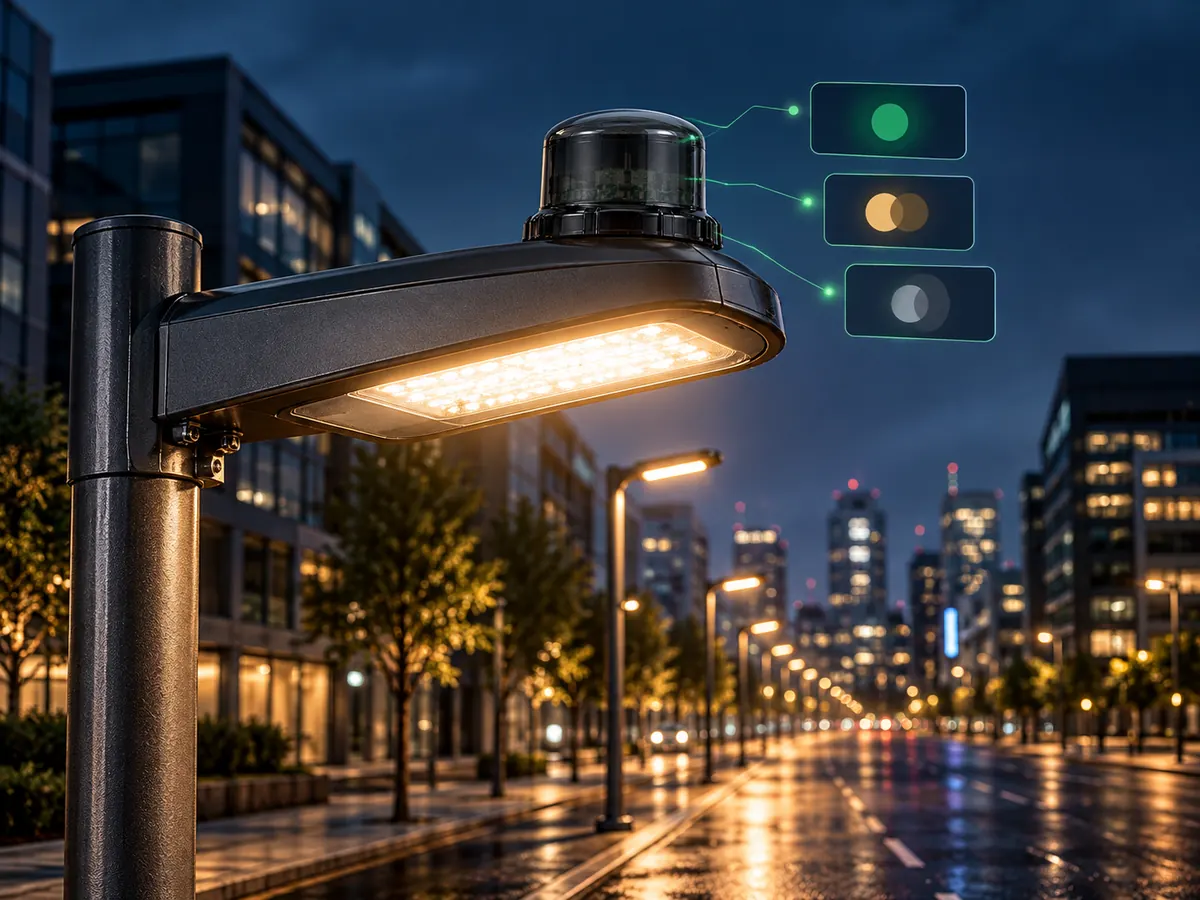
| Lux AITHA LoRa and NB-IoT | Municipal street lighting; industrial estates, logistics warehouses and distribution centers; tunnels and bridges; campuses, hospitals and outdoor parking; roads, walkways and open areas; luminaires with a compatible socket foreseen by the project. |
| LoRa Router | Lighting or sensing networks; tunnels; bridges; public and private lighting; irrigation and access control systems. |
Deployment conditions
Remote communication requires compatible cellular coverage in the IoT variant, plus adequate permissions and configuration.
Coverage
In the IoT variant, operator network availability, bands and conditions must be validated at each site.
Luminaire
Installation requires a luminaire compatible with Zhaga Book 18 and DALI control.
Integration
Platform, permissions, scheduling and event management are defined per project.
Known limits
LoRa range
The 5 km range depends on the radio environment, installation, height and network topology. Every deployment must be validated in the field.
Cellular coverage
The IoT variant depends on operator coverage and service at each point: it must be validated before deployment.
Luminaire compatibility
Requires a luminaire with a Zhaga Book 18 connector and DALI control. DMX available on request; other interfaces are not supported in this family.
Documentation in PDF
Download the product document.
Validate the installation and the coverage
Review Zhaga compatibility, LoRa range or cellular coverage and system configuration with the technical team.