

#StreetLighting
Street lighting remote management and smart city with Lux AITHA
Switch, dim and schedule luminaires, with monitoring through AITHANEX and connectivity selected for each installation.
What street lighting remote management is
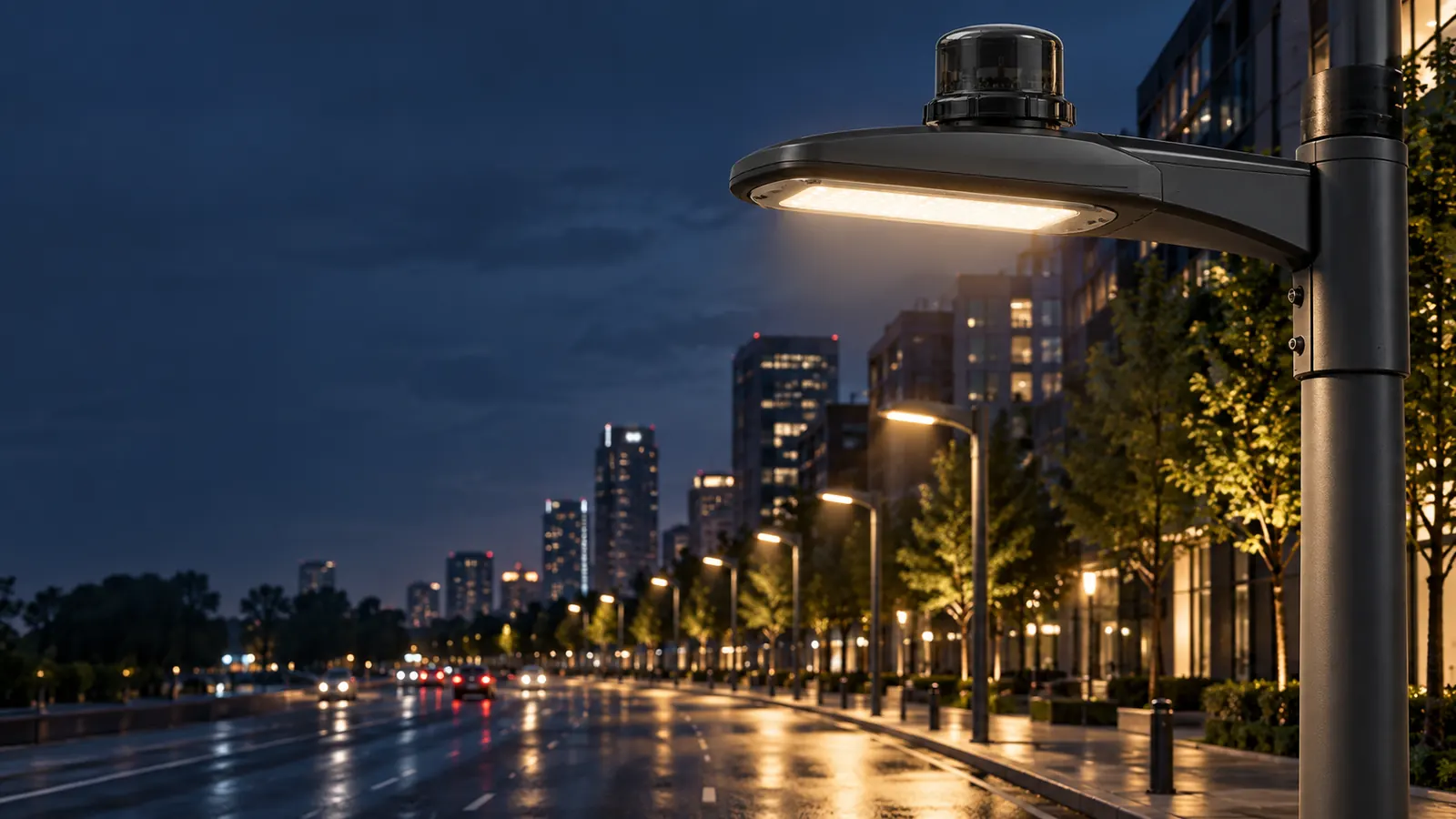
Street lighting remote management lets operators monitor luminaires and send switching, dimming and scheduling commands from a distance. It combines a controller at the lighting point, a communication link and a management platform. Lux AITHA is that controller: it plugs into a Zhaga Book 18 socket and controls the driver through DALI. Connectivity and available functions are validated for each installation.
Monitoring and controlling are not the same thing. Monitoring collects the information the device makes available and helps detect incidents; control sends a command whose execution must be verified. A screen showing a requested level does not prove the luminaire applied it, so the project must define how it tells a request, a confirmation and an observed state apart.
The municipality or maintenance company needs to associate each device with its location and apply schedules. A shared view helps distinguish a reported fault from a device that has stopped reporting. A point without communication may still be lit, and a luminaire that communicates may have a driver or power problem; they should not trigger the same intervention. The aim is to decide with information before dispatching a crew, not after.
Dimming must respect lighting needs and project requirements. It does not replace lighting design or guarantee a particular percentage of energy savings on its own: evaluating savings takes a comparable baseline, a measurement period and rules that keep public space lit as required by the project.
Two connectivity options, one luminaire interface
Lux AITHA LoRa and Lux AITHA NB-IoT share the Zhaga Book 18 interface and DALI control. The LoRa variant uses its own private network at 868 MHz in the EU, not LoRaWAN. Nodes share a separate LoRa Router that links the device network to AITHANEX or the selected management system.
The NB-IoT variant connects each point through the mobile network, without an intermediate LoRa Router. It requires compatible coverage, service and configuration at the site. The choice depends on more than the number of luminaires: street layout, obstacles, available router locations and operating costs also matter. The resource NB-IoT or LoRa for lighting details the selection criteria.
From street lighting to the smart city
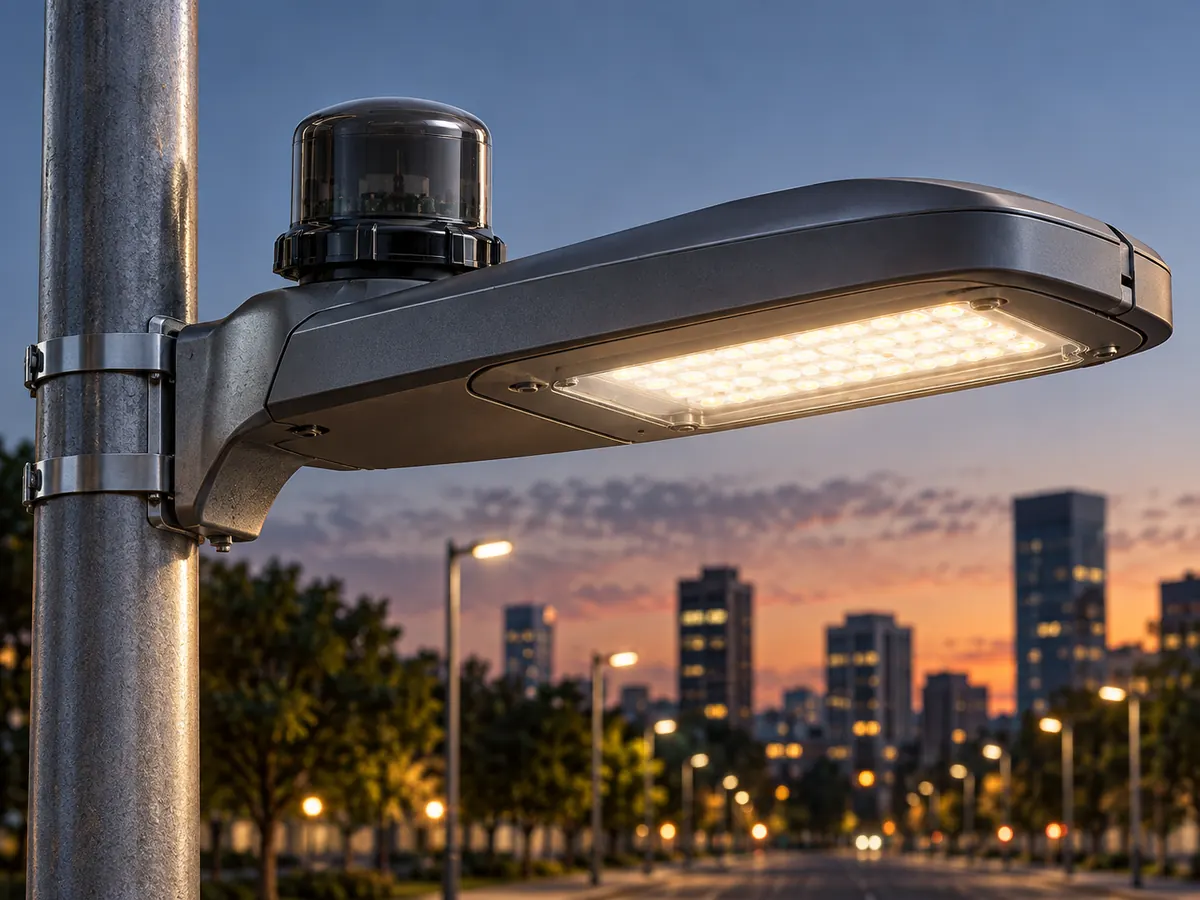
A smart city starts by knowing the state of its infrastructure. Street lighting spans many points across the whole municipality, and every luminaire that is identified, located and monitored adds operational data to the whole. That is what remote management contributes to a smart city strategy: reliable information about lighting points. For the municipality, that information feeds maintenance and planning decisions: which points to check first, where communication fails and which areas need a different connectivity option.
Lux AITHA focuses on luminaire control. Any extension to other urban services is defined per project and validated in a pilot, like every other capability; the municipalities solution covers AITHA’s urban infrastructure lines.
How to prepare a representative pilot
The pilot should include streets and locations that represent the real difficulties: distances, obstacles, mounting height and access conditions. Choosing only the most favourable points produces a demonstration, not a sufficient basis for scaling. Before starting, check the socket, driver and power supply, and build a luminaire inventory with model, driver, position and installed device, using identifiers that maintenance staff recognise.
Tests start with the basics: switching on and off, dimming and applying the agreed schedules. Then verify status reception, incident identification and the response to a network interruption. Each test needs an expected result, evidence and a person responsible for accepting it; otherwise two teams may interpret the same behaviour differently.
Rehearse recovery as well: what data the system keeps, which commands remain pending when the connection returns and what the manual procedure is when communication is unavailable. The continuity of lighting must not depend on someone improvising during an incident.
Criteria for scaling the deployment
Scaling should rest on observed results: communication sufficient for the intended use, verified control, incident traceability and acceptance by the maintenance team. The criteria state what is measured, for how long and who reviews incidents; thresholds belong to the project, not to a generic catalogue promise. Also record exceptions and areas that need a different solution before approving the next group of points. Expanding by whole streets or districts makes it easier to compare the result with the previous situation.
Operation requires defining who changes schedules, who authorises a dimming change and who receives alerts. A change log makes it easier to investigate an incident and avoids mistaking an authorised change for a fault, and shows who decided what and when. Integrating the information into the maintenance process is usually more useful than adding another screen nobody checks during their shift.
The Lux AITHA technical datasheet separates the variants and documents the capabilities that must be checked against the proposed version before specifying the equipment. Zhaga and the DALI Alliance offer more detail on the general interfaces. Declared compatibility, certification and validation of an installation are different kinds of evidence and must not be presented as equivalent.
Validate your lighting installation
Review luminaires, coverage and pilot criteria with the technical team.